
Whether you’re moving a studio flat or relocating a small office, poor packing is the fastest way to turn a manageable truck move into an expensive headache. Broken items, wasted truck space, and overworked movers all trace back to the same root cause: not knowing how to prepare for truck moving before the vehicle arrives. This guide to packing for truck moves walks you through everything, from choosing the right materials and building a pre-move checklist to loading order, securing your load, and the mistakes that catch even experienced movers off guard.
Table of Contents
- Key takeaways
- Packing materials and your pre-move checklist
- Step-by-step loading: how to pack a truck efficiently
- Handling books, documents, and bulky furniture
- Common mistakes and final securing steps
- Packing approaches by move size
- My honest take on packing for a truck move
- Ready to move? Let Themuscleandtruck handle the heavy lifting
- FAQ
Key takeaways
| Point | Details |
|---|---|
| Prepare materials in advance | Gather boxes, furniture blankets, bubble wrap, and strapping before packing day to avoid last-minute delays. |
| Load heaviest items first | Place large, heavy furniture at the front and base of the truck to stabilise the load. |
| Pack fragile items separately | Use dedicated, well-cushioned boxes for glassware and electronics and never stack heavy items on top. |
| Secure every tier before adding another | Tie off each loading tier with twine and rub rails to prevent shifting during transit. |
| Label boxes clearly | Mark every box with its contents and destination room to speed up unloading significantly. |
Packing materials and your pre-move checklist
Before anything goes into a box, you need the right supplies. Packing materials critical for safety include bubble wrap, furniture blankets, plastic bins, and heavy-duty corrugated boxes. Skimping here is a false economy. A £3 box that collapses in the truck costs far more than the box itself when it brings down everything stacked on top of it.
Here is what to source before packing day:
- Heavy-duty double-walled boxes in small, medium, and large sizes
- Bubble wrap and packing paper for fragile items and filling box gaps
- Furniture blankets to protect surfaces and reduce friction during loading
- Shrink wrap for drawers, loose parts, and upholstered pieces
- Ratchet strapping or twine to secure tiers inside the truck
- Heavy-duty packing tape and a tape gun
- Marker pens for labelling, plus coloured stickers if you want room-coded boxes
You can buy moving box packs that bundle multiple sizes together, which tends to work out cheaper than buying individual boxes. If your move is small, hiring a packing kit from a storage supplier is another cost-effective option worth considering.
Pro Tip: Start packing rarely used rooms, such as spare bedrooms and storage areas, at least two weeks before the move. Packing early and labelling clearly dramatically reduces the chaos on moving day itself.
Your preparation checklist should also include:
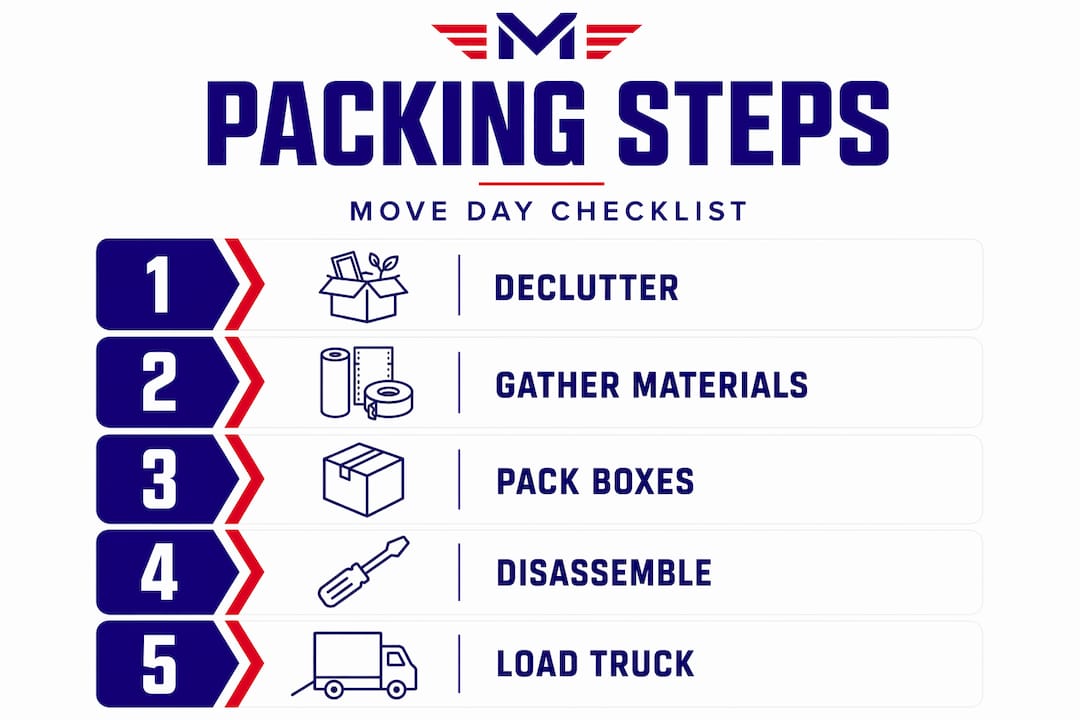
- Decluttering before you pack. Anything you do not need adds weight and cost.
- Measuring large furniture against the truck bay dimensions and any doorways at both ends.
- Securing a parking permit for the loading zone. Failing to secure parking forces the truck to park further away, increasing labour time and your total bill.
- If you are hiring help, getting at least three written quotes that break down hourly rates, travel fees, and any surcharges prevents unwelcome surprises on the day.
| Preparation task | When to do it |
|---|---|
| Declutter and donate unwanted items | 3 to 4 weeks before |
| Source packing materials | 2 to 3 weeks before |
| Begin packing non-essential rooms | 2 weeks before |
| Secure parking permits | 1 week before |
| Confirm mover bookings and quotes | 3 to 5 days before |
| Pack remaining rooms and essentials | Day before or morning of move |
Step-by-step loading: how to pack a truck efficiently
Loading a truck is not simply about fitting things in. It is about weight distribution, protecting surfaces, and making sure nothing shifts while the vehicle is moving. Follow these steps for a load that arrives safely.
- Load the largest and heaviest furniture first. Sofas, wardrobes, bed frames, and large appliances go against the cab wall at the front of the truck. This keeps the centre of gravity low and stable.
- Stand sofas and mattresses on their side. This frees up floor space for boxes and prevents mattresses from becoming a surface that gets walked on.
- Fill the base tier before moving up. Heavy boxes of books and kitchenware sit on the floor alongside furniture. Never stack directly on upholstered furniture surfaces without a blanket underneath.
- Build tiers from heavy to light. Pack items in tiers and secure each tier with twine and rub rails before adding the next layer. Lighter items such as bedding boxes and lampshades sit at the top.
- Fill every gap. Empty space inside the truck is your enemy. Loose items shift, which causes damage. Use bags of soft linens, pillows, and rolled clothing to fill voids around furniture.
- Use furniture blankets liberally. Wrap any timber or painted surfaces that touch each other or the truck wall. Friction over even a short journey can cause deep scratches.
Pro Tip: Distribute the weight evenly from left to right as well as front to back. A truck that is heavier on one side handles unpredictably, particularly when cornering. Keep this in mind as you load and adjust positioning before strapping down.
A few points on fragile items during loading:
- Pack glassware and ceramics in individual sheets of packing paper, then cushion the entire box with crumpled paper or bubble wrap on all six sides.
- Never place heavy boxes on top of a box labelled fragile, regardless of how stable it looks.
- Electronics should go in their original boxes where possible, or in snugly fitting cartons with foam padding. Keep screens vertical, never flat.
For a more detailed walkthrough of preparing your home before the truck arrives, the moving day preparation guide from Themuscleandtruck covers the room-by-room process well.
Handling books, documents, and bulky furniture
These three categories cause the most problems on moving day, and each requires its own approach.
Books are deceptively heavy. Books must be packed in small double-walled boxes no larger than 30 x 40 cm. A standard large box filled with books can weigh over 30 kg, making it a risk for anyone lifting it and a danger if the box base fails mid-move. Pack books flat or on their spine, never on the page edges, and fill any remaining space with packing paper.
Important documents follow a different rule entirely. Original documents should stay with you personally, never in the truck. Passports, tenancy agreements, insurance certificates, and business contracts go into a waterproof folder that travels with you. Copies can go in the truck if needed. This single habit prevents a great deal of stress.
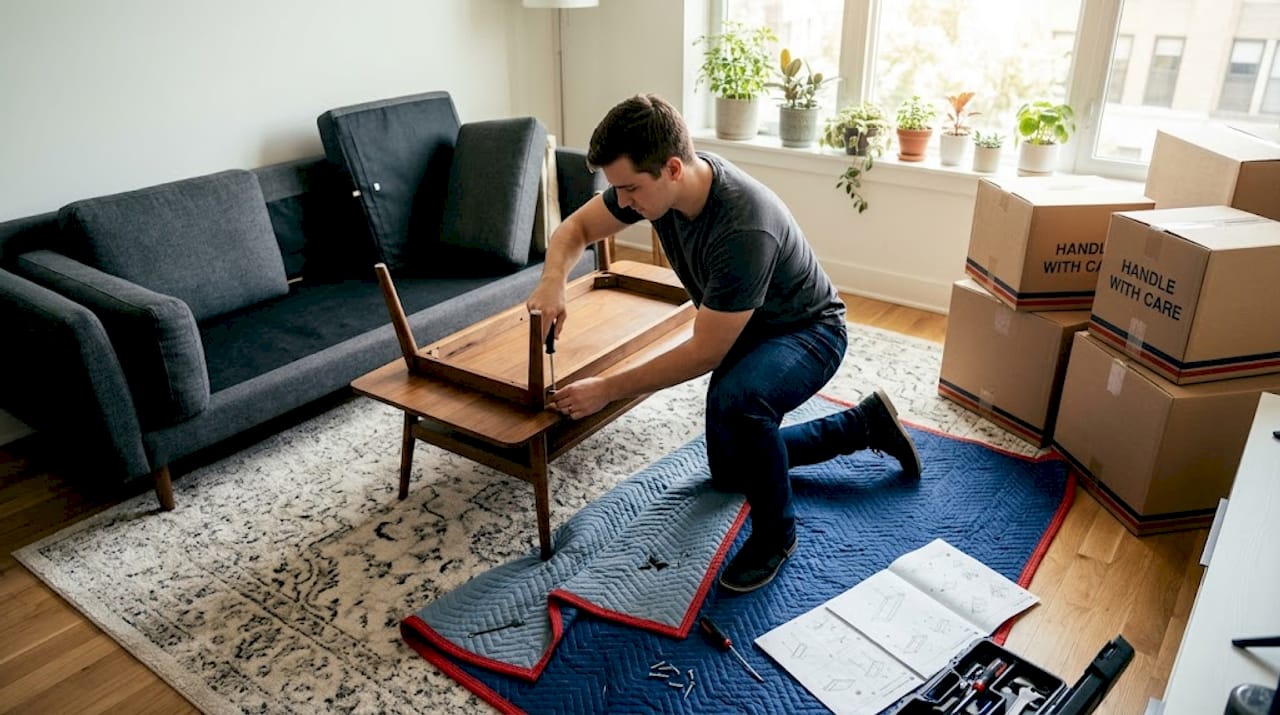
Bulky furniture needs preparation before it goes near the truck. Disassemble anything that comes apart: bed frames, shelving units, and dining tables. Tape hardware such as screws and bolts into a small labelled bag and fix it directly to the piece it belongs to with tape. Wrap all timber edges and glass panels with furniture blankets secured with stretch wrap.
| Item type | Packing method | Common mistake |
|---|---|---|
| Books | Small double-walled boxes, laid flat | Overfilling large boxes until they split |
| Documents | Waterproof folder, carried personally | Placing originals in the truck |
| Glassware | Individual paper wrapping, bubble wrap cushioning | Stacking heavy items on top |
| Bulky furniture | Disassembled, blanket-wrapped, hardware labelled | Leaving loose parts inside drawers |
| Electronics | Original boxes or snug cartons with foam | Packing screens flat under heavy items |
One warning that surprises many people: media consoles should not be used as base furniture when loading the truck. They look sturdy, but they frequently collapse under weight. Keep them upright and free-standing, never as a surface to stack items on.
Pro Tip: For small businesses moving office equipment regularly, invest in reusable plastic crates rather than cardboard boxes. They stack uniformly, protect contents better, and pay for themselves after two or three moves.
Common mistakes and final securing steps
Even well-organised movers make avoidable errors. Here are the ones that cause the most damage and how to sidestep them.
- Overpacking boxes. If you cannot lift a box comfortably with both hands, it is too heavy. Redistribute to a smaller box.
- Ignoring weight distribution. Placing all heavy items on one side of the truck affects the vehicle’s handling. Spread the load evenly.
- Labelling only the top of boxes. When boxes are stacked, the top label disappears. Write on at least two sides, including which room the box belongs to.
- Not keeping a loading priority order. Things you need first at the destination should go in last, so they come out first. Plan your unloading order before you load.
Once loading is complete, do a manual shake test before driving. Walk to each section of the load and push firmly. Any movement means the load needs re-securing with additional strapping. This takes five minutes and prevents damage that could take weeks to sort out with insurers.
“The best moving days are boring. Nothing breaks, nothing is missing, and the truck rolls away exactly on time. That outcome is almost always the result of preparation done days earlier, not skill on the day itself.”
Loading zone compliance matters too. If you are operating in a residential area, check whether time-restricted loading zones apply. Fines and delays cost more than the effort of checking in advance.
Pro Tip: Set aside $20 to $50 per mover as a cash tip, depending on how long and complex the job is. It is not obligatory, but it acknowledges good work and keeps the team motivated through the harder parts of the move.
Packing approaches by move size
Not every truck move is the same scale. Here is a quick reference to match your approach to your situation.
| Move scale | Recommended approach | Key materials |
|---|---|---|
| Single room or studio | Minimalist DIY | 10 to 15 boxes, one furniture blanket, basic tape |
| 2 to 3 bedroom flat | Structured DIY | 40 to 60 boxes, 4 to 6 blankets, strapping, shrink wrap |
| Small business or office | Structured DIY or partial professional help | Plastic crates, document boxes, electronics padding, full blanket set |
| Whole house | Consider professional packing for fragile items | Full packing kit, specialist boxes, packing materials guide |
For smaller moves, a minimalist approach works well if you are disciplined about weight limits per box and keep the load balanced. Larger moves benefit from partial professional help, particularly for fragile or high-value items.
If you are working with a truck hire service like Themuscleandtruck, having everything pre-packed and ready before the crew arrives is what makes the hourly rate genuinely cost-effective. Every minute spent packing during the move window is money you could have saved.
My honest take on packing for a truck move
I have seen a lot of moves go sideways, and almost none of them failed because of the truck or the movers. They failed because someone left the packing until the night before and ran out of boxes at midnight, or because someone packed their entire book collection into one XL box that split at the bottom of the stairwell.
The single biggest thing I have learned is this: preparation time and move time are not interchangeable. You cannot compress two weeks of packing into one frantic morning and expect a clean result. The people who have the smoothest moves are those who treat packing as its own project, not an afterthought before the truck shows up.
For small businesses in particular, I would encourage you to document your packing system. Write down what goes in which crate, photograph your equipment setup before disassembly, and keep a short inventory. It sounds like extra work, but when you are doing this every six to twelve months as your business grows and moves premises, that documentation saves real time and protects you if anything goes missing.
DIY packing with professional transport is genuinely a smart model. You control the quality of your pack, you know where everything is, and you are not paying a premium for someone else to pack things you are perfectly capable of packing yourself. Give yourself the time to do it properly and you will be genuinely surprised at how smooth it can go.
— Jessica
Ready to move? Let Themuscleandtruck handle the heavy lifting
You have done the hard work of packing well. Now you need a truck and a reliable team to get your belongings where they need to go.
Themuscleandtruck specialises in exactly this: providing trucks and manpower for customers who have already packed and just need dependable transport. There are no hidden fees, no confusing packages, just an honest hourly rate that reflects the work done. Whether you are moving a single room or a small office, you can get your instant quote in minutes and book the date that works for you. If you want more guidance before your move, the stress-free movers guide on the Themuscleandtruck blog covers exactly how to coordinate with your crew for the smoothest possible handover.
FAQ
What is the best order to load a truck when moving?
Load the heaviest and largest items, such as wardrobes, sofas, and appliances, first against the cab wall. Build upwards in tiers from heavy to light, securing each tier before adding the next.
How do you keep boxes from shifting in a moving truck?
Fill all empty gaps with soft items such as bedding or rolled clothing, then use strapping or twine tied to the truck’s rub rails to hold each tier in place. Before driving, do a manual shake test to confirm nothing moves.
Should I pack books in large or small boxes?
Always use small, double-walled boxes no larger than 30 x 40 cm for books. Large boxes filled with books become dangerously heavy and risk splitting during the move.
Do I need a parking permit for a moving truck?
In most urban areas, yes. Securing a permit in advance keeps the truck close to your property, which reduces the time and labour cost of carrying items to and from the vehicle.
What items should I never put in the moving truck?
Keep original documents such as passports and contracts with you personally at all times. Irreplaceable items, medication, and valuables should also travel with you rather than in the truck.