
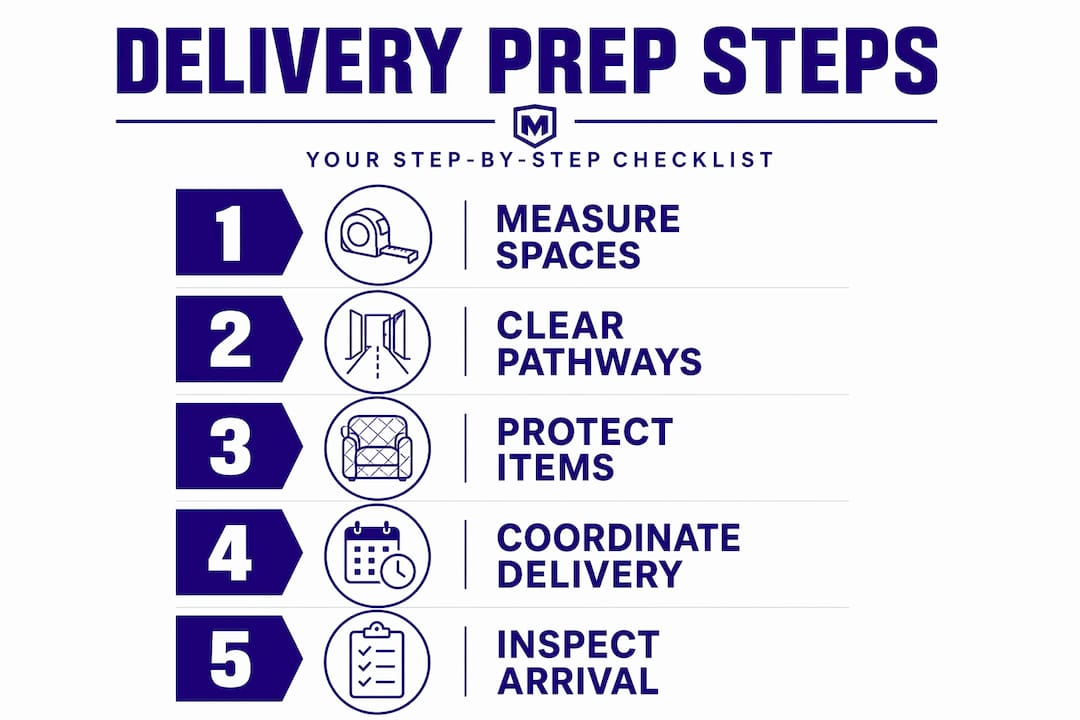
Getting furniture from point A to point B sounds simple until a sofa gets wedged in a stairwell, a glass tabletop arrives cracked, or the delivery crew shows up and nothing fits. A proper step by step furniture delivery process prevents all of this. Whether you are moving a single armchair across town or coordinating a multi-piece office fit-out for your small business, the difference between a smooth delivery and a costly disaster almost always comes down to preparation. This guide walks you through every stage, from measuring your space to handling damage claims.
Table of Contents
- Key takeaways
- Step by step furniture delivery: measuring your space first
- Packing, protecting, and preparing your furniture
- Booking and coordinating your delivery service
- What to do on delivery day
- Handling common delivery problems
- My honest take on furniture delivery logistics
- Make your next delivery simple with Themuscleandtruck
- FAQ
Key takeaways
| Point | Details |
|---|---|
| Measure before you order | Check every doorway, hallway, and staircase before your furniture arrives to avoid on-site surprises. |
| Protect and label everything | Disassemble detachable parts, wrap surfaces properly, and label all hardware bags before transit. |
| Know your delivery type | Choose the right service level, from curbside to white-glove, based on your budget and handling needs. |
| Inspect on arrival | Photograph packaging and note any damage on the delivery paperwork before signing off. |
| Document throughout | Keeping photos of labels, seals, and condition at every stage is your best protection if a claim arises. |
Step by step furniture delivery: measuring your space first
Measuring your space and delivery path before delivery day is the single most effective way to prevent last-minute problems. Most people measure the room and forget everything in between. The furniture still has to travel through your front door, down a corridor, around a corner, and possibly up a staircase before it reaches that room.
Start with the room itself. Record the length, width, and ceiling height, then use painter’s tape on the floor to mark out the footprint of your new piece. This lets you see exactly how it will sit in the space before anything arrives. It sounds basic, but it stops you committing to a placement that blocks a socket or crowds a walkway.
Then work backwards from the room to the street. Measure every doorway, hallway, and turning point along the intended route. The figure you really need is the narrowest point measurement along the entire path. A sofa might clear your front door with centimetres to spare and then get stuck at the internal lobby door, which is 10 centimetres narrower.
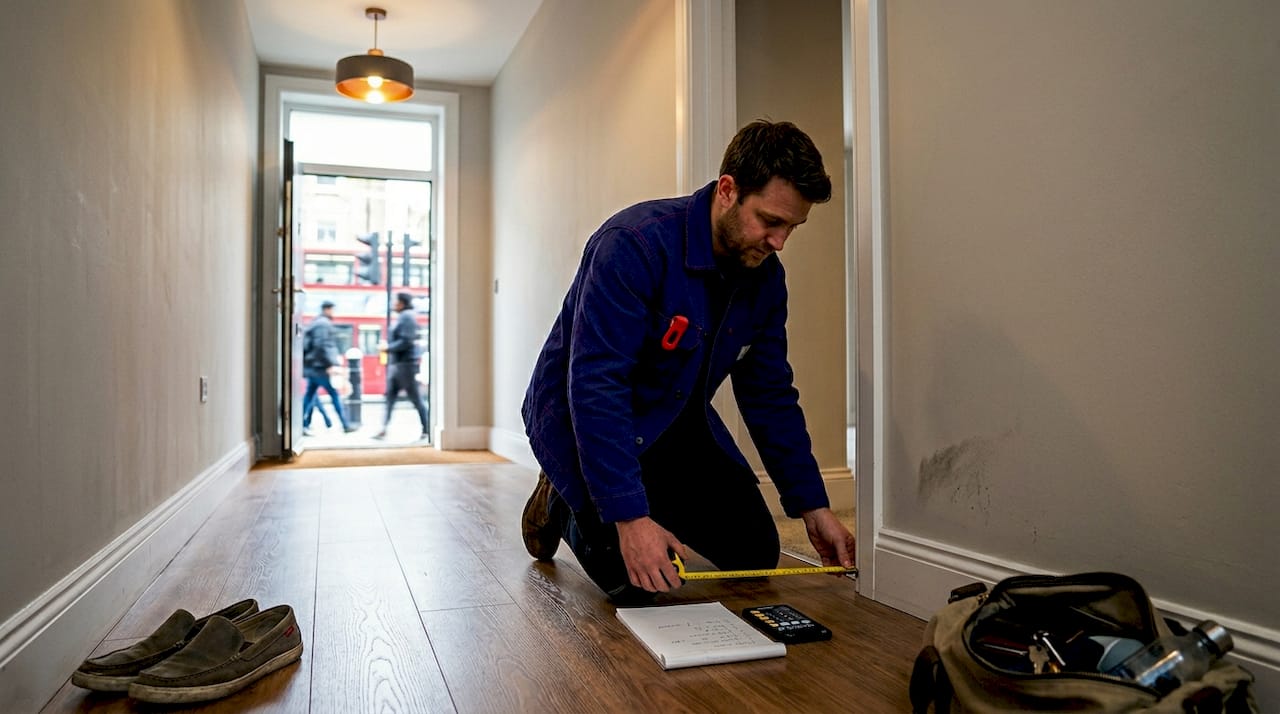
For staircases, measure the width at the tread, the width at the landing, and the ceiling height above the staircase. Low ceilings on a turn are where tall wardrobes and bed frames tend to fail. If you are in a high-rise, communicate elevator access requirements to your building management and your delivery team well in advance. Some buildings require lift padding and booking slots, which adds time if not arranged early.
Pro Tip: Share all your measurements with the delivery team in writing before the day. A quick message with doorway widths, lift dimensions, and any tight corners gives the crew time to plan and bring the right equipment.
Packing, protecting, and preparing your furniture
Whether you are organising a delivery for newly purchased furniture or relocating existing pieces, protection during transit is non-negotiable. Damage that happens in the truck almost never looks like obvious impact. It shows up as scratched corners, scuffed legs, and broken glass edges that were not wrapped properly.
Here is a practical approach to getting furniture ready:
- Disassemble what you can. Remove legs, shelves, glass tops, and any protruding hardware. Smaller, flatter pieces are easier to wrap, easier to carry, and far less likely to suffer corner damage.
- Bag and label all hardware. Put screws, bolts, and brackets into zip-lock bags and tape them directly to the item they belong to. Label the bag clearly. You will thank yourself during reassembly.
- Wrap surfaces thoroughly. Use stretch wrap for fabric and upholstery, and furniture blankets or foam padding for hard surfaces. For guidance on wrapping furniture correctly, the material you choose matters depending on the finish, wood veneer needs padding, lacquered surfaces need non-adhesive wrap.
- Add fragile labels and directional arrows. Mark which side faces up and flag anything that cannot be tipped or stacked. These labels only work if they are visible, so place them on multiple sides.
- Photograph everything before packing. Take clear photos of the item’s condition, including any existing marks or chips, before wrapping it up. This is your baseline if a damage dispute arises later.
Pro Tip: Photograph the completed package too, including any labels or markings. If damage occurs in transit, you need proof the item left in good condition. A phone photo with a timestamp is often enough to support a claim.
Booking and coordinating your delivery service
Not all furniture deliveries are created equal. Before you confirm a booking, you need to understand what level of service you are actually paying for. The options generally fall into four categories:
| Service type | What it includes | Best for |
|---|---|---|
| Curbside | Drop-off at the kerb only | Budget-conscious, able to carry items inside |
| Threshold | Delivery to front door or lobby | Those in ground floor or easily accessible units |
| Room of choice | Placed in your chosen room | Most residential deliveries |
| White-glove | Full placement, assembly, and packaging removal | Large pieces, premium items, or high-rise units |
White-glove services may also include receiving inspections, pad wrapping, and minor repairs as part of the handover process. For a new sofa in a three-storey walk-up or a large executive desk going into a corporate office, that extra care is often worth the cost.
When booking, confirm:
- The delivery time window (most providers offer a four-hour window with a 30-minute pre-arrival call, as scheduled delivery windows show is standard practice)
- How the team will handle access, gated entries, or lift bookings
- Whether assembly is included or charged separately
- The escalation process if something goes wrong
Preparing your home for movers also means clearing the delivery path inside your home before the crew arrives. Move smaller items out of hallways, secure any pets, and have your payment or booking confirmation ready.
What to do on delivery day
Delivery day is where preparation pays off. Stay present and focused throughout the unloading process. Here is the order of events you should follow:
- Receive the pre-arrival call. Most services will call roughly 30 minutes before arrival. Use that time to do a final check of your cleared path and confirm parking access for the truck.
- Inspect packaging before signing anything. Check every item for external damage before the crew moves it inside. Photograph the packaging as it arrives, even if it looks fine. This creates a timestamped record.
- Verify your inventory. Cross-check each piece against your order confirmation. Count items. Check that all boxes, parts, and accessories are present before the team leaves.
- Note any damage on the paperwork. If you spot damage, write it on the delivery receipt before signing. A vague note like “possible damage” is far less useful than “dent on left rear corner of oak sideboard.” Be specific.
- Guide placement and assembly. Once items are cleared and verified, direct the team on where each piece goes. For complex assemblies, oversee the process rather than leaving it entirely to the crew.
- Do a final walkthrough. Before the team departs, check that every item is placed correctly, all packaging is removed (if included in your service), and nothing has been left behind.
Thorough delivery inspection with detailed documentation is your strongest protection against disputes. Signing a clean receipt when damage is present is the single biggest mistake people make on delivery day.
Pro Tip: Keep the original packaging for at least 48 hours after delivery. Some damage only becomes visible once an item is unwrapped and positioned in light. Having the original box intact makes returns and replacements significantly easier.
Handling common delivery problems
Even with excellent preparation, things can go wrong. Here is how to handle the most frequent issues:
- Furniture that does not fit. If a piece will not clear a doorway, do not force it. Check whether the item can be moved safely on its side or whether a panel or leg can be removed to reduce its profile. In extreme cases, hoisting through a window is a legitimate (if costly) option.
- Damage discovered on arrival. Stop unpacking and photograph everything immediately. Chain-of-custody documentation, including photos of waybills, labels, and the damaged area, is what makes a damage claim viable. Contact the retailer or carrier within 24 hours.
- Delayed or missed delivery. Get written confirmation of the new delivery window and ask what compensation applies. Many providers have policies for missed appointments, but you need to ask explicitly.
- Missing parts or incomplete delivery. Do not sign the delivery note as complete if items are missing. Mark what is absent on the paperwork and follow up in writing immediately after the crew leaves.
- Last-minute access issues. If your building management suddenly restricts lift access or parking, contact your delivery provider as early as possible. Same-day changes cost everyone time and may incur rescheduling fees.
The common thread in every one of these situations is documentation. Photos, written notes, and clear communication in writing protect you at every stage of the furniture moving process.
My honest take on furniture delivery logistics
I have seen a pattern repeat itself too many times. People spend weeks choosing the right furniture and then treat the delivery as an afterthought. They assume the delivery crew will handle everything. What I have learned is that the handover between retailer and customer is where most problems live, and nobody has more to lose than you.
In my experience, the biggest wins come from treating delivery day as a project with a checklist, not a passive event you wait to see unfold. The readers who contact us after a stressful delivery almost always say the same thing: “I didn’t think to check that.” A measurement not taken, a photo not snapped, a damage note not written. None of these take more than a few minutes, but skipping them can cost hundreds in repair or replacement costs.
What I find underrated is the value of direct, specific communication with your delivery provider. Do not assume they know your building has a small goods lift or that your corridor has a sharp corner. Tell them. Write it down. Confirm it on the day. The logistical planning that starts early does not just reduce stress. It is what makes smooth deliveries the rule rather than the exception.
— Jessica
Make your next delivery simple with Themuscleandtruck

If you want the logistics handled properly without paying for a full-service move, Themuscleandtruck is built exactly for that. Their model lets you handle your own packing while leaving the heavy lifting and transportation to a reliable, experienced team. You get transparent hourly pricing, a truck that fits your load, and trained crew who know how to move furniture safely without damaging your items or your home. For individuals and small business owners who want efficiency without the premium price tag, this is the practical middle ground. Head to Themuscleandtruck and get an instant quote to see exactly what your delivery will cost before you commit.
FAQ
How do I measure for furniture delivery?
Measure the room footprint, then measure every doorway, hallway, staircase, and lift along the delivery route. The narrowest point on the path determines whether your furniture will fit.
What should I do if furniture arrives damaged?
Photograph the damage immediately, note it specifically on the delivery paperwork before signing, and contact the retailer or carrier in writing within 24 hours. Keep all original packaging as supporting evidence.
What is the difference between curbside and white-glove delivery?
Curbside drops your furniture at the kerb and nothing more. White-glove delivery includes carrying items to your chosen room, assembly, and removal of all packaging, with scheduled time windows and pre-arrival communication.
How can I prevent furniture not fitting through doorways?
Pre-measure all doorways and tight corners before ordering or booking delivery. Share those measurements with your delivery provider so they can plan the route and bring any equipment needed.
Do I need to be present during furniture delivery?
Yes. Being present allows you to inspect items on arrival, note damage before signing, guide placement, and verify that your full order has been delivered. Signing off and leaving it to someone else significantly increases your risk if something goes wrong.