
You’ve packed every box, labelled every bag, and mentally planned the entire move. Yet on the day itself, the lift is blocked, the movers can’t find parking, and a critical document is buried under a pile of cushions. Small-scale moves in Singapore can unravel quickly, not because of bad luck, but because a few preparation steps were skipped. This guide walks you through exactly what to do before movers arrive, from staging your space to running a final inspection, so your move stays fast, smooth, and within budget.
Table of Contents
- What you need before movers arrive
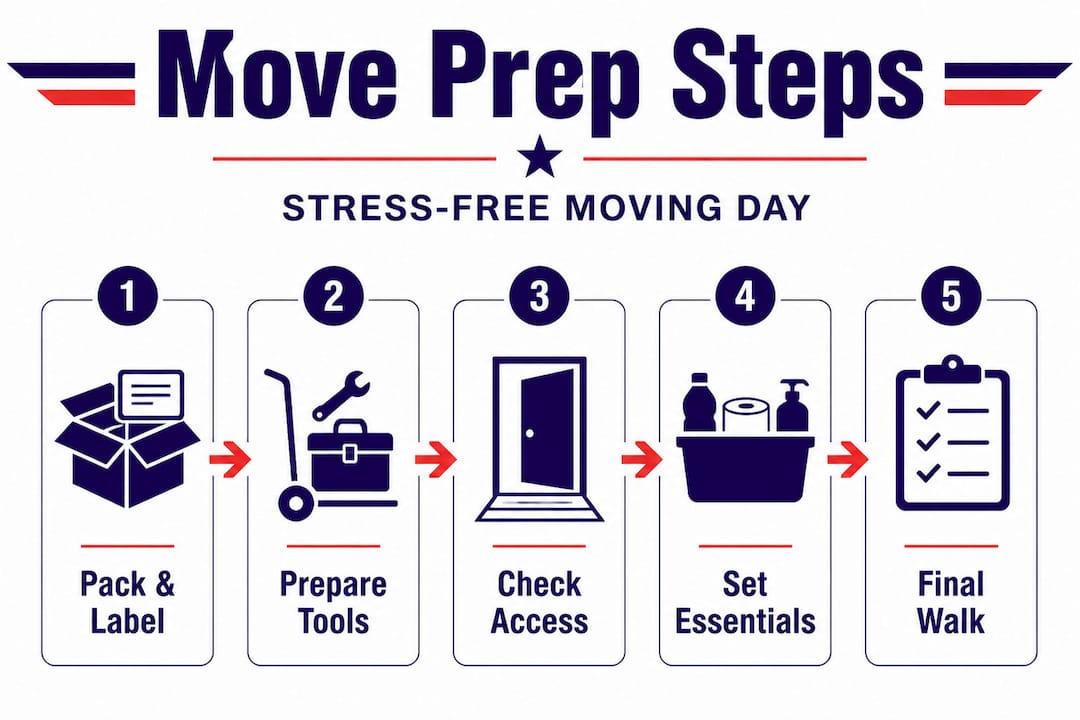
- Step-by-step: getting your space ready for movers
- Small move, big mistakes: what to avoid
- Maximising results: your final moving day inspection
- Our take: why quick, clear prep beats expensive extras for small moves
- Get your Singapore move sorted quickly and affordably
- Frequently asked questions
Key Takeaways
| Point | Details |
|---|---|
| Prepare essentials in advance | Gather materials, confirm bookings, and check access before movers arrive. |
| Stage items for quick loading | Sort and place boxes near entryways to help movers work efficiently. |
| Avoid costly errors | Clarify service scope, separate valuables, and check for hidden costs before moving day. |
| Final walkthrough matters | A thorough room-by-room check helps catch missed items and prevents disputes with movers. |
What you need before movers arrive
Having set the stage for a seamless move, let’s ensure you have everything at your fingertips.
Most people focus entirely on packing and forget that the actual moving day requires its own checklist. Preparation is not just about having boxes ready. It’s about making sure every person, document, and physical space is set up for a fast and frictionless process.
Materials and tools to have ready
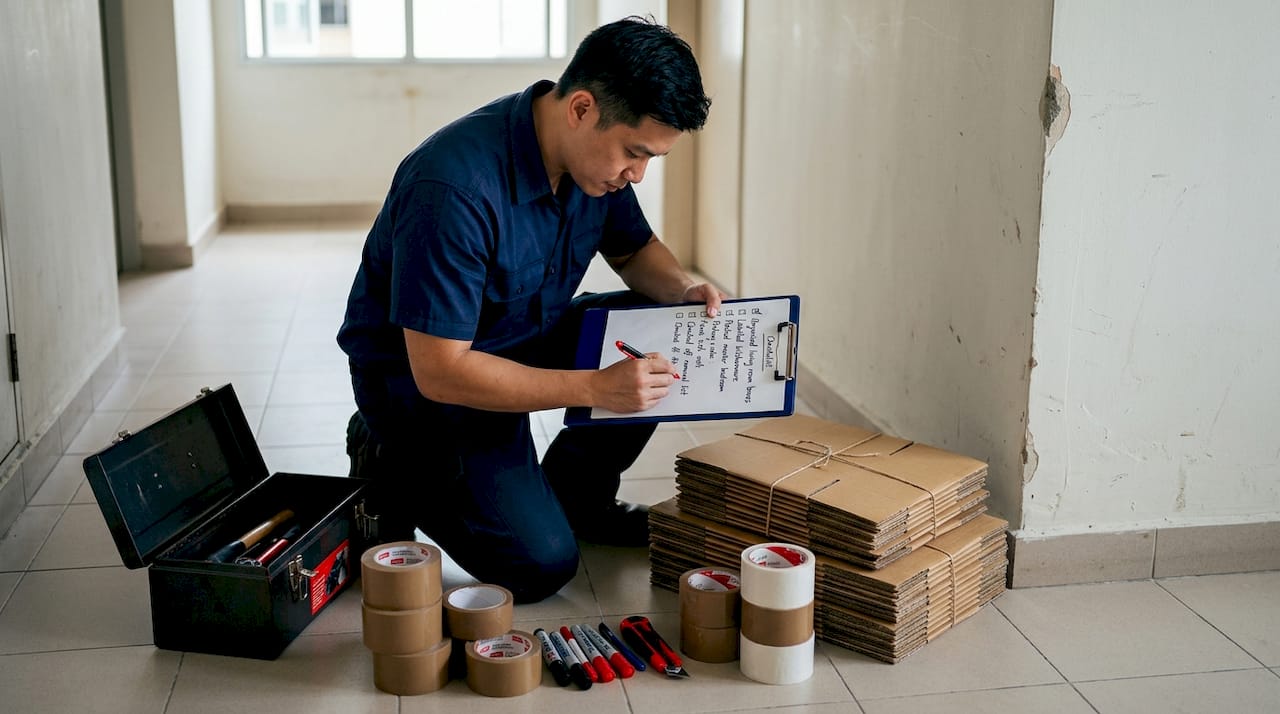
Gather these before moving day:
- Packing tape and a tape dispenser to re-seal any boxes that have loosened overnight
- Permanent markers and sticky labels for last-minute relabelling
- Scissors or a box cutter for cutting tape or trimming straps
- A small bag or box for essentials such as chargers, keys, medications, and important documents
- Moving blankets or old towels if you want extra padding for wooden furniture edges
As organising and labelling boxes before the moving day speeds up loading and minimises confusion, it pays to double-check every label is legible and pointing outward.
Documents and access details
Keep these in a folder or envelope that stays with you throughout the move:
| Document or detail | Why it matters |
|---|---|
| Moving contract or booking confirmation | Confirms agreed scope and timing |
| New address and access code | Avoids delays at the destination |
| Lift booking confirmation | Essential in most HDB and condo buildings |
| Parking arrangement details | Needed for loading bay clearance |
| Emergency contacts | Useful if movers run late or access fails |
Thinking ahead about avoiding packing service pitfalls also means being clear on what your chosen service covers, so there are no unpleasant surprises about what happens to items you haven’t pre-packed.
Assessing building access in advance
This step is one of the most overlooked. In Singapore, many HDB blocks and condominiums require advance booking for lifts and loading bays. Contact your building management at least three to five days ahead. Confirm whether there are time restrictions on moving activities. Some buildings only allow moves between certain hours on weekdays.
Also check the vehicle clearance height at your loading bay. Some lorries or larger trucks cannot enter certain carparks, which may mean the movers need to park further away and carry items a longer distance. That adds time and cost.
Pro Tip: Keep fragile items and high-value belongings in a separate, clearly marked box or bag. Set this aside from the main load and inform your movers it should not be stacked under other boxes. This single step prevents the majority of damage claims on moving day.
Step-by-step: getting your space ready for movers
Once you have all materials and plans in place, it’s time to translate preparation into action.
The night before or morning of your move, follow this sequence to ensure your home or office is optimally staged. Many clients underestimate how much time is saved when movers can work without navigating clutter or guesswork.
-
Clear all hallways and corridors. Remove shoes, bicycles, strollers, and any items that block pathways. Every extra minute movers spend navigating obstacles costs you time on an hourly rate.
-
Move boxes and furniture near exits. As boxes gathered near the entrance reduce loading time significantly, try to stage items as close to the door as possible without blocking the exit itself.
-
Group items by room destination. Label boxes clearly with the destination room at your new address, not just the origin room. “Master bedroom, new place” is far more useful to a mover than simply “bedroom.”
-
Prepare special instruction notes. If certain pieces of furniture must face a particular way, or if a specific room needs items delivered first, write it down and hand it to the lead mover before they start.
-
Communicate elevator timings. If you’ve booked a lift for a specific window, tell your movers the exact slot. Many building lifts in Singapore are in high demand on weekends, so timing is critical.
-
Inform movers of delicate items. Even if you’re using a no-frills service that does not cover fragile handling, pointing out which boxes are breakable helps movers exercise caution without needing to ask repeatedly.
“A little communication at the start of a move saves far more time than any shortcut mid-way through. Tell your movers what matters to you before the first box is lifted.”
Following these pro packing steps beforehand means your movers spend their time actually moving, not asking questions or waiting for instructions.
Pro Tip: Before the movers arrive, use your phone to photograph how your furniture is currently arranged. This is especially useful in bedrooms or living areas where you’ll want to reassemble items in a similar layout. It takes two minutes and can save you hours of guesswork later.
For more expert moving tips specific to Singapore conditions, it’s worth reading up on common BTO move scenarios, many of which apply equally to rental or resale flat moves.
Small move, big mistakes: what to avoid
Even the best-laid plans can falter. Here’s where most people stumble and how you can avoid their mistakes.
The most common preparation errors
-
Forgetting to book the lift or loading bay. This is the single biggest cause of delays in Singapore moves. A 30-minute wait for lift access on a busy Saturday can blow your schedule completely.
-
Assuming movers will disassemble furniture. Budget and no-frills services, like those offered for pre-packed DIY moves, typically do not include dismantling bed frames, wardrobes, or large shelving units. Read your service agreement carefully before moving day.
-
Leaving valuables mixed in with general boxes. Passports, jewellery, cash, and irreplaceable documents should travel with you personally, not in the moving truck. This is non-negotiable.
-
Choosing a mover based on price alone. The cheapest option is not always the best fit. A mover priced $30 lower might not have the right truck size, enough manpower, or coverage for your route. Fit matters as much as cost.
-
Not confirming the booking the day before. A quick call or message to your movers on the eve of your move confirms timing, access details, and headcount. It only takes five minutes and prevents nasty surprises.
As clarifying service scope in advance helps clients reduce risks and avoid hidden costs, it’s worth spending time reading your booking confirmation carefully and raising questions before, not during, the move.
Comparing mover approaches
Understanding the difference between budget and professional services helps you set realistic expectations.
| Factor | Professional full-service mover | No-frills/budget mover |
|---|---|---|
| Packing included | Yes | No |
| Furniture dismantling | Usually included | Usually excluded |
| Insurance coverage | Comprehensive | Basic or none |
| Pricing model | Fixed or itemised | Hourly |
| Best suited for | Large, complex moves | Pre-packed, small-scale moves |
| Transparency of costs | Variable | High (if hourly rate is published) |
| Booking flexibility | Advance notice needed | Often same-day available |
If you’re already pre-packed and just need a reliable truck and a couple of strong hands, a full service vs no-frills comparison will quickly show you there’s no point paying for services you don’t need.
Pro Tip: Always ask your mover specifically: “Does your service include furniture assembly at the destination?” If the answer is no, plan to do it yourself or arrange separately. Knowing this in advance means you can have the right tools ready without slowing the movers down.
Maximising results: your final moving day inspection
With everything staged and ready, all that’s left is to make sure every detail is ticked off before movers arrive.
A final walk-through is not just a formality. It’s your last opportunity to catch anything that might lead to a dispute, a delay, or genuine regret after the truck pulls away.
-
Walk through every room, including storage spaces. Open every cupboard, check under beds, look inside built-in wardrobes, and don’t forget the utility room, bomb shelter, or roof storage if you have them.
-
Check all common areas. Letterboxes, bicycle storage cages, car boot compartments, and shared lockers are easy to forget in the chaos of moving day.
-
Confirm inventory with your movers. Before loading begins, do a quick verbal confirmation of the main items being moved. This is especially important for large furniture pieces and appliances.
-
Photograph your current home’s condition. Take timestamped photos of walls, floors, and fixtures before the movers start. This protects you when settling your tenancy deposit or handing back keys to a landlord.
-
Confirm destination access details with your movers. Make sure they have the exact address, unit number, any access codes, and contact details for someone at the destination if you’re not travelling in the truck.
A thorough walk-through after packing helps catch missed items and avoids disputes, so treat this as a required step rather than an optional one.
Statistic to note: Research on moving industry practices consistently shows that a large proportion of post-move complaints relate to items left behind or damage that occurred before the movers even arrived. Preparation and documentation are your best protections.
For additional guidance on vetting your moving help before the day, safe hire tips are particularly useful for first-timers or those using a new provider.
Pro Tip: Use your phone’s camera or a simple checklist app to run through a room-by-room inspection. Screenshot your final list so you have a time-stamped record of completion. It takes less than ten minutes and gives you genuine peace of mind.
Our take: why quick, clear prep beats expensive extras for small moves
You’ve covered the moving basics. Allow us to share what we’ve learnt from thousands of moves with Singapore clients.
Here’s something that surprises many people: the smoothest moves we see are almost never the most expensive ones. They’re the ones where the client spent an extra hour preparing well. Full-service packages are valuable in the right context, particularly for large households, elderly residents, or complex commercial relocations. But for the vast majority of small-scale moves in Singapore, the people who struggle most are not the ones who skipped premium services. They’re the ones who skipped preparation.
We’ve seen small families move a two-room flat in under two hours, not because they paid more, but because every box was labelled, the lift was pre-booked, the movers had clear instructions, and there were no surprises on arrival. Contrast that with clients who spent more on a “full package” but hadn’t cleared their corridors, hadn’t communicated about access, and ended up with a three-hour job that could have taken ninety minutes.
The real cost of poor preparation is not just time. It’s stress, it’s extra hourly charges, and it’s the frustration of a day that should have felt like progress instead feeling like chaos. Cost-saving move solutions are not about cutting corners on the service. They’re about being smart with your own contribution to the process.
Our honest view: for most pre-packed, small-scale moves, you don’t need to pay for extras. You need to prepare well. The two together give you a move that’s fast, affordable, and genuinely stress-free.
Get your Singapore move sorted quickly and affordably
If you’ve followed this guide, you’re already better prepared than most movers in Singapore. The next step is just as simple.
At The Muscle & Truck Co., we specialise in exactly this kind of move. Transparent hourly pricing, reliable trucks, and experienced movers for clients who are pre-packed and ready to go. No hidden fees, no unnecessary extras, no fuss. Whether you’re shifting a studio flat, a small office, or a few large items across town, you can get a fast moving quote in under two minutes. Our platform is designed for people who value clarity and efficiency as much as affordability. Book when you’re ready.
Frequently asked questions
What should I do the night before movers arrive?
Double-check that everything is packed and labelled near entrances for speedy loading, and confirm your booking details with the moving team.
How can I help movers work faster?
Clear all hallways and doorways of obstacles, provide written instructions for any special requirements, and book building lifts or organise access in advance to avoid delays on the day.
Who is responsible if anything gets damaged during the move?
Always clarify service scope and coverage before moving day. Professional services may include basic coverage, but the specific terms vary, so confirm in writing before you sign.
Is it necessary to tip movers in Singapore?
Tipping is not required or expected, but it is always appreciated when the team has done an excellent job under pressure.
How can I avoid hidden moving costs?
Discuss all fees upfront and confirm exactly what is included in your quote. Clarifying responsibilities in advance is the most reliable way to avoid unexpected charges on moving day.