
Moving furniture is one of those tasks that looks straightforward until you are halfway through a doorway with a sofa and realise nothing fits. Whether you are doing a full home relocation or shifting a few large pieces to a new flat, getting your furniture moving tips 2026 sorted before the day arrives makes an enormous difference. This guide covers the practical side: what to prepare, which tools actually help, how to move specific furniture types without injury, and how to keep costs sensible. No fluff. Just the stuff that works.
Table of Contents
- Key takeaways
- 1. Safety and preparation before you move anything
- 2. Essential tools that actually make moving easier
- 3. How to move specific furniture types safely
- 4. Loading, securing, and transporting your furniture
- 5. Cost-effective and time-saving strategies
- My honest take on moving furniture in 2026
- Move smarter with Themuscleandtruck in 2026
- FAQ
Key takeaways
| Point | Details |
|---|---|
| Prepare before you lift | Measure all routes and disassemble furniture before moving day to avoid getting stuck. |
| Use the right tools | Match sliders to your floor type and use a dolly for heavy pieces to protect your body and flooring. |
| Reduce weight first | Empty drawers and remove detachable parts before lifting to cut weight significantly. |
| Load trucks strategically | Place heavy items first, distribute weight evenly, and strap everything securely before driving. |
| Balance protection with practicality | Wrap items that need it, not everything. Over-wrapping wastes time and money. |
1. Safety and preparation before you move anything
Good preparation is the difference between a smooth move and a costly one. Before you touch a single piece of furniture, take a few deliberate steps to protect yourself, your helpers, and your property.
Wear the right gear. PPE for furniture moves includes work gloves to protect your hands from sharp edges and closed-toe shoes with proper traction to stop you slipping on smooth floors. This sounds basic, but skipping it is how people end up with crushed toes or sliced fingers.
Measure everything. Access is a geometry problem, and professional movers treat it that way. Measure your doorways, hallways, stairwells, and lift dimensions before moving day. Compare those measurements against your furniture. A few centimetres of clearance matters enormously when you are manoeuvring a king-sized bed frame through a corridor.
Plan a clear path. Walk the entire route from furniture location to truck or new room. Remove rugs, shoes, loose cables, and anything else that could cause a trip. If you are moving through shared building corridors in Singapore, book the service lift in advance where possible.
Confirm your moving-day details with any service providers ahead of time. A quick call or message the evening before prevents scheduling errors that eat into your day.
Pro Tip: Take photos of access points with a tape measure visible. Share these with your helpers or moving team so everyone arrives prepared, not surprised.
2. Essential tools that actually make moving easier
You do not need a van full of specialist equipment. A few well-chosen tools make a dramatic difference to both safety and speed.
Furniture sliders are arguably the most underrated piece of moving kit available. They work by switching friction from dragging to near-gliding, protecting your floors and saving your back. The catch: slider type must match your floor. Use plastic sliders on carpet and felt-padded sliders on hardwood or tile. Using the wrong type can scratch or scuff your flooring, which defeats the purpose entirely.
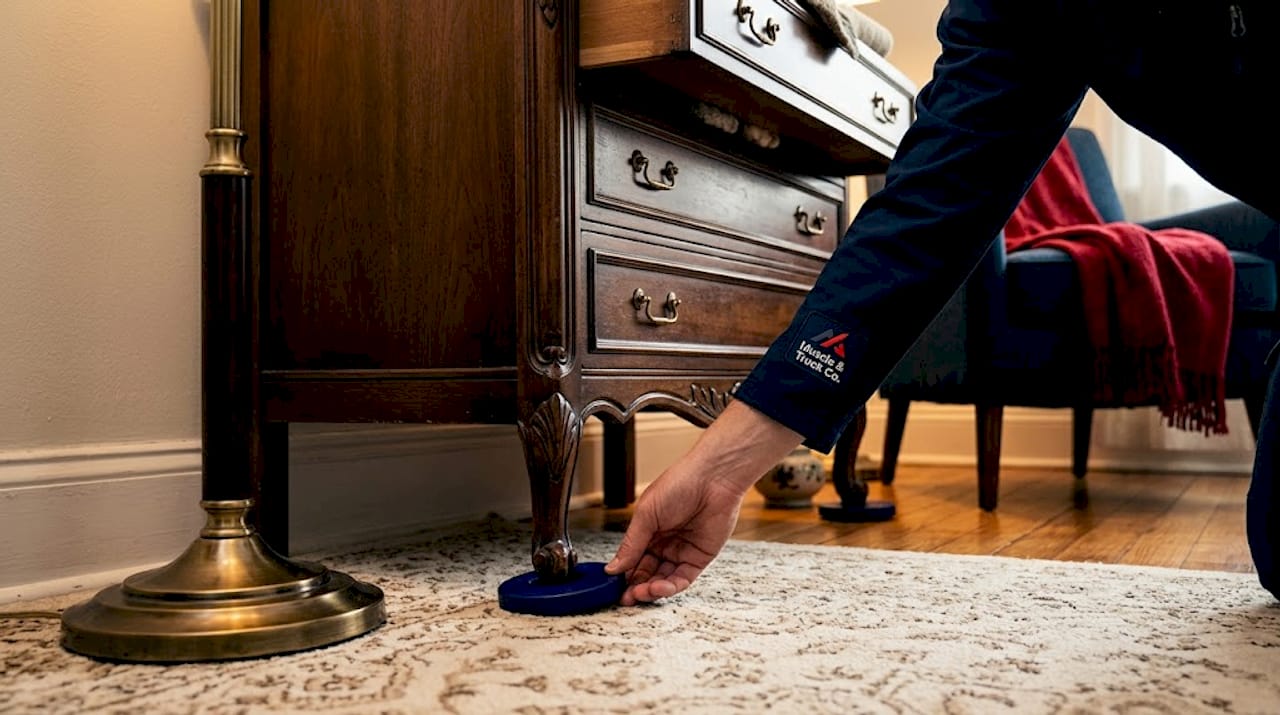
Dollies fall into two main categories. A four-wheel platform dolly is ideal for moving boxes, dressers, and refrigerators across flat surfaces. An appliance dolly (the upright two-wheeler) works better for navigating stairs with washing machines or tall cabinets. Having both on hand gives you flexibility.
Moving straps distribute weight across your shoulders and forearms rather than concentrating it in your hands and lower back. They are particularly useful on stairs, where keeping a firm grip while also watching your footing is genuinely difficult.
Shrink wrap is useful for securing cabinet doors and loose drawers during transit. However, shrink wrap works best when applied with intention. Wrap items with swinging or detachable parts, but do not wrap everything out of habit. It adds time and cost without always adding protection.
Protective blankets and moving pads go between furniture surfaces and anything they might rub against during transport. A wardrobe leaning against a truck wall without padding will show the evidence later.
Pro Tip: If you are only moving a few pieces, renting a pack of sliders for the day is far cheaper than buying a full set. Check hardware stores or ask your moving service if they supply them.
3. How to move specific furniture types safely
Different furniture types require different approaches. Here is a practical breakdown for the pieces that cause the most trouble.
- Dressers and chests of drawers. Removing drawers can cut the weight of a full dresser by over 100 pounds (roughly 45 kg). Always empty and remove drawers before lifting the carcass. Stack drawers separately and carry them individually.
- Beds. Disassemble completely. Remove the headboard, footboard, slats, and any storage components. Keep all bolts and screws in a labelled zip-lock bag taped to the frame, so reassembly does not become its own ordeal.
- Tables. Remove legs where possible. Tables are awkward to carry upright and become much more manageable as a flat surface once the legs are off. Store legs together and keep fixings with them.
- Sectional sofas. Disconnect all sections and move each piece independently. For stubborn doorways, rotating a couch vertically through the frame often works when horizontal does not. Tilt one end up and pivot through the opening slowly.
- Wardrobes and tall cabinets. Carry tall furniture from the high end leading, and the low end following. This keeps the centre of gravity lower and gives the person at the back better control. Remove shelves and internal fittings first.
- Lifting technique for everything. Lift with your legs, not your back. Keep the load close to your body. Never twist your torso while holding weight. If two people are moving an item, agree on a count before lifting and communicate throughout. See lifting techniques for furniture for a detailed walkthrough specific to Singapore conditions.
- Securing items on a dolly. Always strap furniture to the dolly before moving it. A wardrobe that topples off a dolly is a hazard to everyone nearby.
4. Loading, securing, and transporting your furniture
How you load a truck matters as much as how you lift the furniture in the first place.
| Step | What to do | Why it matters |
|---|---|---|
| Load heavy first | Place large, heavy pieces along the cab wall | Keeps centre of gravity low and stable during transit |
| Distribute weight evenly | Balance weight across both sides of the truck floor | Prevents uneven tyre wear and difficult handling |
| Strap everything securely | Use ratchet or cam buckle straps across all tall items | Stops furniture shifting and falling on corners and bends |
| Pad all contact points | Place moving blankets between straps and furniture surfaces | Avoids pressure marks and scratches |
| Secure loose parts | Wrap drawers, doors, and detachable sections with shrink wrap or tape | Prevents parts swinging open and getting damaged |
Loading heavy items first is a rule that experienced movers rarely skip. It sets a stable base for lighter items stacked on top and stops the truck becoming top-heavy.
For longer distances or moves involving wet weather, consider covering furniture with plastic sheeting over the top of your protective blankets. Rain coming through a truck door during unloading can do real damage to timber and upholstered pieces.
5. Cost-effective and time-saving strategies
Moving furniture does not have to drain your budget. With a bit of planning, you can keep costs down without cutting corners on safety.
Declutter before you pack. Every piece of furniture you do not move is money and time saved. Go through each room honestly before the move and decide what is worth transporting. Donate, sell, or dispose of pieces that you have been meaning to replace anyway. This is one of the highest-value steps in any 2026 furniture transport guide and most people skip it.
Schedule your move on an off-peak day. Weekday moves are typically cheaper than weekend slots for truck hire and labour services. If your schedule has any flexibility, a Tuesday or Wednesday move can make a meaningful difference to the total cost.
Recruit help strategically. Friends and family can be a genuine help, but only if they know what they are doing and can commit to the full day. For heavier lifts, a labour-only moving service like Themuscleandtruck can supplement your DIY effort without requiring you to book a full-service package.
Pre-organise all hardware and tools. Pack an essentials box with Allen keys, screwdrivers, tape, and all the fixings you will need for reassembly. Load this box last so it comes off the truck first. Nothing slows a move down like hunting for a screwdriver at 9pm.
Use pre-packed boxes efficiently. If your belongings are already packed, read about moving with pre-packed boxes to maximise how you load and stack them around furniture in the truck.
Prepare the new space in advance. Know exactly where each piece of furniture is going before the truck arrives. Furniture that gets placed once and stays placed saves everyone considerable effort compared to shifting things around twice.
My honest take on moving furniture in 2026
I have watched a lot of moves. The ones that go wrong almost always share one thing: people underestimate the preparation and overestimate their ability to improvise on the day.
The single tip I would give anyone reading this is to measure first, always. I have seen a three-seater sofa sit in a stairwell for two hours because nobody measured the landing turn. That is an entirely avoidable situation. Treat access as a geometry exercise before moving day, not during it.
Furniture sliders genuinely surprised me the first time I saw them used properly. What looks like a minor accessory can halve the effort of moving a heavy bookcase across a tiled floor. But I have also seen people grab the wrong type and scratch an expensive hardwood floor in the process. Matching the slider to the surface is not optional.
My other honest observation: people tend to over-wrap. Most moving hacks fail because they apply protection indiscriminately rather than matching it to what can actually go wrong with each piece. Wrap what moves, swings, or scratches. Leave everything else alone.
Finally, talk to your helpers. Lifting in silence is how backs get strained and furniture gets dropped. A clear count, an agreed route, and open communication throughout the lift are worth more than any single piece of equipment.
— Jessica
Move smarter with Themuscleandtruck in 2026
If you have done the prep, packed your boxes, and are ready to move, Themuscleandtruck takes on the heavy lifting and transport so you do not have to. The service is built for movers who are self-sufficient with packing but want reliable truck access and trained labour for the hard parts. There is no need to book a full-service package when all you need are capable hands and a truck on the day.
Pricing is transparent and hourly, so you pay for what you actually use. You can get an instant quote directly on the website and confirm your booking quickly. For more on what to expect from the moving-day experience, visit Themuscleandtruck and see how the service is designed around movers exactly like you.
FAQ
What are the most important furniture moving tips for 2026?
Measure your access routes before moving day, disassemble furniture where possible, use the correct sliders for your floor type, and load heavy items into the truck first. These four steps prevent the majority of delays and damage.
How do I move heavy furniture without injuring myself?
Always lift with your legs and keep the load close to your body. Use moving straps to distribute weight across your shoulders, and use a dolly for pieces over roughly 50 kg. Never twist your torso while holding a heavy load.
Do furniture sliders actually work on all floor types?
No. Plastic sliders work on carpet and felt-padded sliders work on hardwood or tile. Using the wrong type can damage your flooring rather than protect it.
Should I disassemble all furniture before a move?
Disassemble anything that will not fit through a doorway or corridor intact. Removing legs and shelves from large pieces gives you extra clearance and significantly reduces the risk of damage to both the furniture and the walls.
How do I keep moving costs down in 2026?
Declutter before the move to reduce the total volume, book on a weekday if your schedule allows, and use a labour-only or hourly truck service rather than a full-service mover when you have already handled the packing yourself.