
Moving is one of those life events that looks manageable on paper until the boxes pile up and the clock runs out. Whether you are relocating a flat or shifting a small business to a new office, the difference between a chaotic move and a smooth one almost always comes down to preparation. These examples of efficient moving tips draw from tested relocation practices to help you cut wasted time, protect your belongings, and arrive at your new space without burning out. From building your timeline to unpacking on day one, every step here is practical and ready to use.
Table of Contents
- Key takeaways
- 1. Examples of efficient moving tips: start with a realistic timeline
- 2. Declutter before you pack a single box
- 3. Pack room by room, not item by item
- 4. Choose the right box size for every item
- 5. Label every side of every box
- 6. Pack fragile items properly
- 7. Moving day tactics: load smart, move at the right time
- 8. Manage your energy, not just your schedule
- 9. Unpack in order, starting with your essentials box
- 10. Compare moving approaches before you commit
- My honest take on efficient moving
- Make your move easier with Themuscleandtruck
- FAQ
Key takeaways
| Point | Details |
|---|---|
| Start planning early | A structured multi-week timeline spaces out tasks and prevents last-minute panic. |
| Declutter before packing | Removing unwanted items first reduces the volume you pack, transport, and unpack. |
| Pack and label room by room | Keeping box contents to one room speeds up unpacking significantly. |
| Load heavy items first | Placing heavy boxes against the truck walls keeps the load stable during transit. |
| Prepare an essentials box | Pack first-day necessities separately so you are not rummaging through stacks to find your toothbrush. |
1. Examples of efficient moving tips: start with a realistic timeline
The single biggest mistake movers make is treating packing as a one-weekend job. It almost never is. A structured 6-week timeline works best by splitting the process into two phases: the first three weeks cover decluttering and gathering supplies, and the final three weeks focus on packing from least-used storage areas through to daily-use rooms. That order matters because it keeps your home functional right up until moving day.
Start by writing out every task you need to complete and assign it a specific week. Be honest about how long things take. Dismantling furniture, arranging a truck, notifying your utility providers, all of these tasks eat time that most people forget to budget.
Pro Tip: Use a free app like Google Tasks or Trello to build your moving checklist. Ticking off completed items gives you a clear view of what is left and stops you from losing track of the small but critical jobs.
For Singapore residents, the complete moving checklist from Themuscleandtruck breaks this down specifically for HDB and condo moves, which have their own lift booking and access requirements worth planning around.
2. Declutter before you pack a single box
Decluttering before packing reduces costs, speeds up your packing, and cuts physical exhaustion. Moving experts consistently rank this as the number one efficiency step, and it is easy to understand why. Every item you do not take with you is one fewer item to wrap, box, carry, load, unload, and unpack.
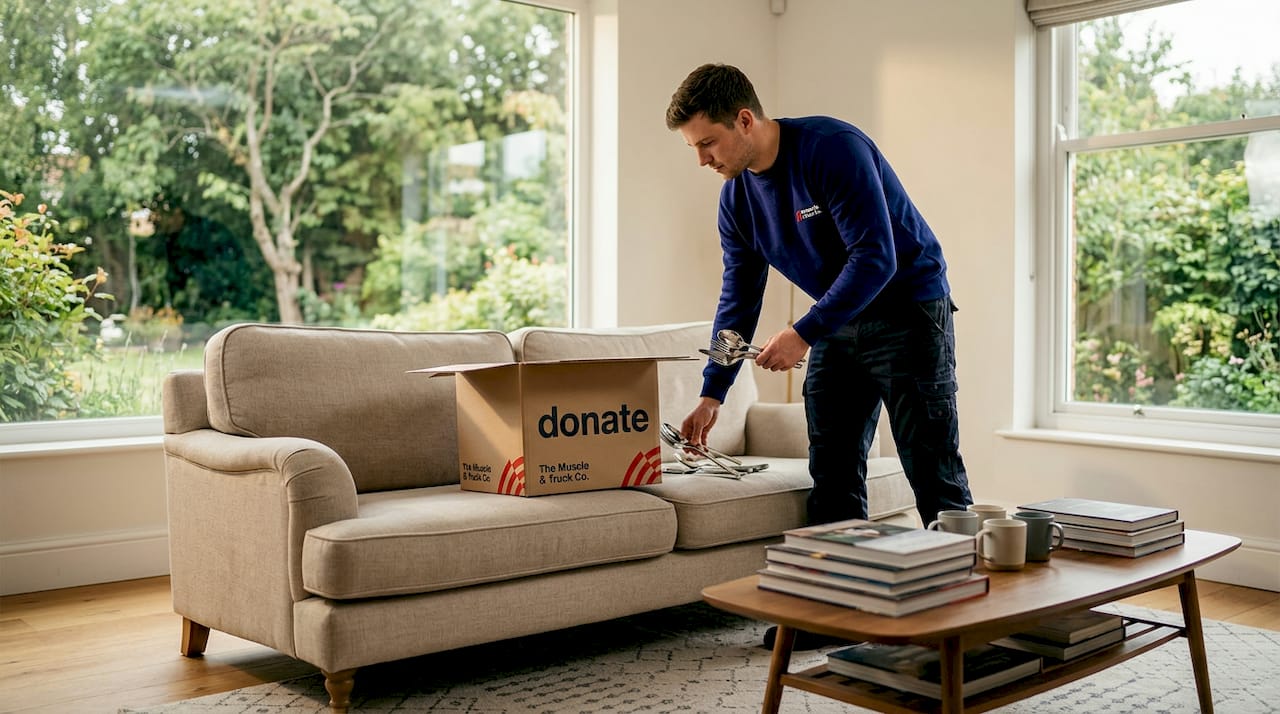
Do this as a dedicated phase, not while you are packing. Decision fatigue is real. When you are mid-pack trying to decide whether to keep a lamp you have not used in two years, you slow everything down. Instead, set aside a weekend purely for sorting into three groups: keep, donate or sell, and dispose.
This step also has a direct financial benefit. Fewer boxes means less time on the truck, which matters significantly if you are paying for moving help by the hour.
3. Pack room by room, not item by item
Room-by-room packing leads to faster unpacking and far less re-sorting compared to packing by item category. The common misconception is that grouping all books together or all kitchen items together is more logical. In practice, it creates confusion when you are trying to set up individual rooms at the destination.
Pack one room completely before moving to the next. Close the box, label it, and move on. When those boxes arrive at your new place, they go straight to the right room. No second-guessing, no shuffling boxes around trying to work out which one holds the bedroom reading lamp.
A good step-by-step guide for small moves recommends starting with rooms you use least: spare bedrooms, storerooms, and home offices. End with the kitchen and bedroom essentials.
4. Choose the right box size for every item
Box selection is something most people get wrong, and it costs them on moving day. Heavy items go in small boxes to prevent overloading, while bulky lightweight items like pillows, duvets, and lampshades belong in large boxes. Matching box size to item density protects the box itself from splitting and makes lifting far safer.
A full large box of books is almost impossible to carry safely and risks both injury and box failure. A half-filled large box, on the other hand, wastes space and shifts during transit. Match size to weight, and fill gaps with soft items like clothing or towels to keep contents stable.
5. Label every side of every box
Most people label the top of the box. The problem is that boxes stack during transit and storage, which means the label is hidden until someone starts unloading. Labelling box sides rather than just the top allows movers to identify contents at a glance without moving other boxes out of the way. This one change noticeably reduces delays during unloading.
Write the destination room, a brief contents summary, and any handling notes such as “fragile” or “this side up” on at least two sides of every box. Consider adding a priority number so you know which boxes to unpack first.
Colour coding takes this further. Using a different colour of tape or label per room can halve your unloading time by allowing movers to route boxes directly to the correct room without reading anything at all.
Pro Tip: Photograph the contents of each box before sealing it. Store the photos in a labelled album on your phone. If you need something urgently, you can find it in seconds without opening every box.
6. Pack fragile items properly
Fragile items that are packed incorrectly do not just break. They take up space inefficiently and create anxiety on moving day. Packing plates vertically with unprinted packing paper between each one significantly reduces breakage compared to stacking them flat. Glasses should be individually wrapped and packed with cushioning around them.
Bubble wrap works well for irregularly shaped items. For everyday fragile goods like ceramics, clean towels and clothing are a cost-free alternative that also reduces the number of separate boxes you need. Avoid newspaper unless the item will be washed before use, as the ink transfers easily.
Place fragile boxes on top of heavier ones in the truck. Never let anything heavy rest on top of a fragile box in transit.
7. Moving day tactics: load smart, move at the right time
On moving day itself, the order of loading matters. Heavy furniture and appliances go in first, positioned against the truck walls for stability. Fill the gaps between large items with soft bags or boxes of clothing to prevent shifting during transit. Fragile and high-priority items load last so they come off first.
Planning your move for off-peak hours reduces delays caused by traffic and congestion. In Singapore, this often means starting before 9am or after 7pm to avoid peak-hour congestion, particularly in the CBD and central regions. An early start also gives you a longer day to unpack at the other end.
Here is a quick moving day checklist to keep handy:
- Confirm truck arrival time and lift booking at both locations the evening before
- Keep your essentials box separate and accessible throughout the move
- Photograph complex electronics wiring before disconnecting anything
- Take a final walkthrough of your old place before leaving
- Have cash or payment ready for your movers
Pro Tip: Before unplugging your TV, router, or desktop setup, take a photo of all the cable connections. Reconnecting everything at the new place becomes a five-minute job rather than a frustrating puzzle.
For more advice on coordinating with movers effectively, the stress-free move guide from Themuscleandtruck covers what to have ready on the day.
8. Manage your energy, not just your schedule
Frequent short breaks during packing and on moving day reduce mistakes by preventing burnout. This is not just about comfort. Fatigue causes errors: fragile boxes get stacked incorrectly, labels get skipped, and items get left behind. Treating your energy as part of your moving plan is a practical efficiency decision.
Pace your work in blocks. Pack for 45 to 60 minutes, then take a proper break to stretch, eat, or step outside. On moving day, the same principle applies. Pushing through exhaustion leads to poor decisions and increases the risk of injury, especially when carrying heavy items up and down stairs.
Stress management through pacing maintains your overall efficiency across what is often a very long day.
9. Unpack in order, starting with your essentials box
Maintaining an essentials box with first-day items is one of the most consistently recommended tips for a smooth relocation. Pack it last so it comes off first. Include toiletries, phone chargers, a change of clothes, important documents, medications, snacks, and anything else you will need before the unpacking is done.
Once the essentials box is open and accessible, unpack in this order:
- Bedroom: set up beds so you have somewhere to sleep that night.
- Bathroom: get toiletries in place so the room is functional.
- Kitchen: unpack cooking essentials so you can prepare a simple meal.
- Living areas: arrange furniture and sort everything else at your own pace.
Pro Tip: Break down and remove empty boxes as soon as they are empty. Stacked flat boxes take up very little space, and clearing them as you go keeps the floor accessible and your head clearer.
10. Compare moving approaches before you commit
Not every strategy suits every move. Before you decide on your approach, it helps to weigh the most common methods against each other.
| Approach | Efficiency | Cost impact | Stress level |
|---|---|---|---|
| Declutter first, then pack | High | Reduces costs notably | Low |
| Pack everything, sort later | Low | Increases volume and cost | High |
| Room-by-room packing | High | Neutral | Low |
| Random packing by category | Medium | Neutral | Medium |
| DIY packing, outsource transport | High | Cost-effective | Medium |
| Full-service professional move | Medium | High cost | Low |
| Colour-coded labelling | High | Minimal cost | Low |
| Top-only labelling | Low | No cost | Medium |
The most effective combination for most individuals and small businesses is: declutter first, pack room by room, colour-code your labels, and outsource the heavy lifting and transport. You keep control of your belongings and reduce costs, while removing the hardest physical work from your plate.
My honest take on efficient moving
I’ve seen plenty of moves go sideways, and the pattern is almost always the same. People leave packing too late, try to sort and pack at the same time, and then wonder why they are exhausted before the truck even arrives.
The advice I stand behind most strongly is this: treat decluttering as its own project. Do it weeks before you pack a single box. It genuinely cuts your moving volume and, with it, your stress and cost. Most people resist it because letting go of things is uncomfortable. But once you start, the relief is immediate.
The other thing I have found overlooked time and again is labelling box sides. Everyone knows to label boxes. Almost nobody labels all four sides. On a busy moving day with boxes stacked six high in a truck, the difference between finding what you need quickly and wasting 20 minutes searching is right there on the side of the box.
My final point is about energy management. A move is a physical project that spans days. Treating it like a sprint leads to errors in the afternoon and injury by evening. Build rest into your plan. Your move will be more efficient for it, not less.
— Jessica
Make your move easier with Themuscleandtruck
You have done the hard work of planning, packing, and labelling. The last thing you want is to worry about whether the truck will show up on time or whether there are enough hands to carry the heavy stuff. Themuscleandtruck offers transparent, hourly-priced truck and manpower services designed specifically for pre-packed moves in Singapore. Whether you are moving a studio flat or relocating a small office, you can get an instant quote online in minutes, with no hidden fees and no pressure. For more on cost-saving move solutions that fit around your DIY packing approach, the Themuscleandtruck blog has detailed guidance to help you plan and budget with confidence.
FAQ
How far in advance should I start planning a move?
Start at least six weeks before your moving date. Use the first three weeks for decluttering and gathering supplies, and the final three weeks for packing room by room.
What goes in an essentials box?
Pack toiletries, chargers, a change of clothes, medications, important documents, and snacks. This box should be the last one loaded and the first one off the truck.
Is room-by-room packing really faster?
Yes. Room-by-room packing reduces the time spent re-sorting boxes at your destination, because every box already belongs to a specific room.
Where should I label my boxes?
Label at least two sides of every box, not just the top. Movers can identify stacked boxes without moving them, which speeds up unloading considerably.
When is the best time of day to move?
Starting before 9am or moving in the evening helps you avoid peak-hour traffic and reduces transit time, particularly in busy urban areas like Singapore’s city centre.