
Many Singaporeans assume that moving home or office means booking an expensive full service company, paying for packing, dismantling, and all the extras. The reality is quite different. A growing number of cost-conscious individuals and small businesses are choosing smarter, leaner options that get the job done without unnecessary spending. This guide walks you through exactly how to plan, pack, and execute a successful move on your own terms, covering everything from understanding your options to comparing real costs, so you can move with confidence and keep more money in your pocket.
Table of Contents
- What does moving without full service movers mean?
- Planning your move: Preparation and checklist
- Packing and loading: Practical tips for DIY movers
- Cost comparison and value: DIY vs full service mover options
- When to consider a hybrid solution or no-frills help
- The reality of DIY moving in Singapore: hard truths and practical wisdom
- Affordable, flexible moving solutions with The Muscle & Truck Co.
- Frequently asked questions
Key Takeaways
| Point | Details |
|---|---|
| Understand your moving options | Clarifying the differences helps you choose the best solution for your needs and budget. |
| Preparation is essential | Organising your move early reduces stress and prevents costly surprises. |
| Careful packing saves money | Protecting your items through proper packing minimises risk and cuts moving expenses. |
| DIY moves are usually cheapest | Doing it yourself or with no-frills help is ideal for smaller relocations in Singapore. |
| Hybrid solutions fit tricky jobs | Mixing DIY with hired transport or manpower may be the smartest choice for challenging moves. |
What does moving without full service movers mean?
Not all moves are created equal. Before you decide on an approach, it helps to understand the spectrum of moving services available in Singapore.
Full service movers handle virtually everything. They pack your belongings, dismantle furniture, transport items, reassemble furniture at the new location, and sometimes even offer insurance coverage for fragile goods. This level of service comes at a significant cost, often ranging from $800 to well over $2,000 for a standard HDB flat move.
No-frills moving services sit in the middle. You handle all packing and preparation yourself. The service provider supplies a truck and manpower to load, transport, and unload your pre-packed boxes and furniture. There is no packing, no fragile item handling, and no extensive dismantling involved. As highlighted in flexible moving services, no-frills moving solutions are ideal for smaller, pre-packed jobs and cost-conscious customers.
True DIY moves mean you do absolutely everything, including borrowing a van from a friend or hiring a commercial vehicle yourself. This can work for very small loads but becomes impractical quickly.
Here is a straightforward comparison to help you decide:
| Feature | Full service mover | No-frills service | True DIY |
|---|---|---|---|
| Packing included | Yes | No | No |
| Manpower provided | Yes | Yes | No |
| Truck provided | Yes | Yes | Hire yourself |
| Furniture dismantling | Often | No | No |
| Fragile item handling | Yes | No | No |
| Typical cost (1-room to 3-room) | $800 to $2,000+ | $250 to $600 | Variable |
| Best suited for | Complex, large moves | Pre-packed, small moves | Tiny loads only |
Understanding the difference between full service vs. no-frills movers is the first step towards making a decision that genuinely fits your situation.
Key insight: Most people who live in a 1 to 3-room HDB flat or manage a small office move are over-served by full service companies. You are paying for capabilities you simply do not need.
Who benefits most from no-frills or DIY approaches? Single professionals, young couples moving into their first flat, students vacating dorm rooms, and small business owners relocating a compact workspace all fall into this category. If your belongings are pre-packed and there are no extremely delicate antiques involved, you are an ideal candidate.
Planning your move: Preparation and checklist
Good planning is where most DIY moves succeed or fail. The steps you take in the weeks before moving day directly affect how smoothly everything goes. As any experienced mover will tell you, careful preparation is key for stress-free moves and avoiding hidden costs.
Here is a step-by-step planning approach that works reliably for small-scale Singapore moves:
- Decide your move date at least two to three weeks ahead. Weekends and end-of-month slots book up fast, especially around school holidays.
- Take a full inventory of your belongings. Walk through every room and note what you are taking, donating, or discarding. Be ruthless. Every item you remove from the move reduces your cost.
- Declutter before you pack. Singapore has excellent options for donating usable goods through platforms like Carousell or local community groups. Fewer items mean fewer boxes and potentially a smaller truck.
- Measure large furniture pieces. Check whether your sofa, wardrobe, or bed frame can fit through the lifts and corridors at both your old and new addresses. This simple step prevents frustrating delays on moving day.
- Book your transport and manpower early. Once your date is confirmed, lock in your booking. Last-minute bookings often mean limited availability or higher rates.
- Prepare your new space. If possible, visit your new address before moving day. Know where you want each item to go so that unloading is efficient.
- Confirm building regulations. Many HDB blocks and condominiums require advance notice for lift bookings and have specific approved moving hours. Check with your management office at least a week ahead.
Pro Tip: Use a simple spreadsheet to track which boxes contain which items and which room they belong to at the new address. Label every box clearly on the top and side. This single habit will save you an enormous amount of time when unpacking.
Thorough moving day preparation also means having a dedicated bag or box of essentials readily accessible throughout the move. Pack toiletries, chargers, a change of clothes, important documents, and any medications separately. These should never go onto the truck.
A solid DIY home movers checklist should also include confirming utilities transfers, updating your address with banks and government agencies, and arranging parking or loading bay access at both locations.
Packing and loading: Practical tips for DIY movers
Once your plan is in place, the physical work begins. Packing done well protects your belongings and makes loading significantly faster. Packing well prevents damage and saves money, especially for small, self-managed moves.
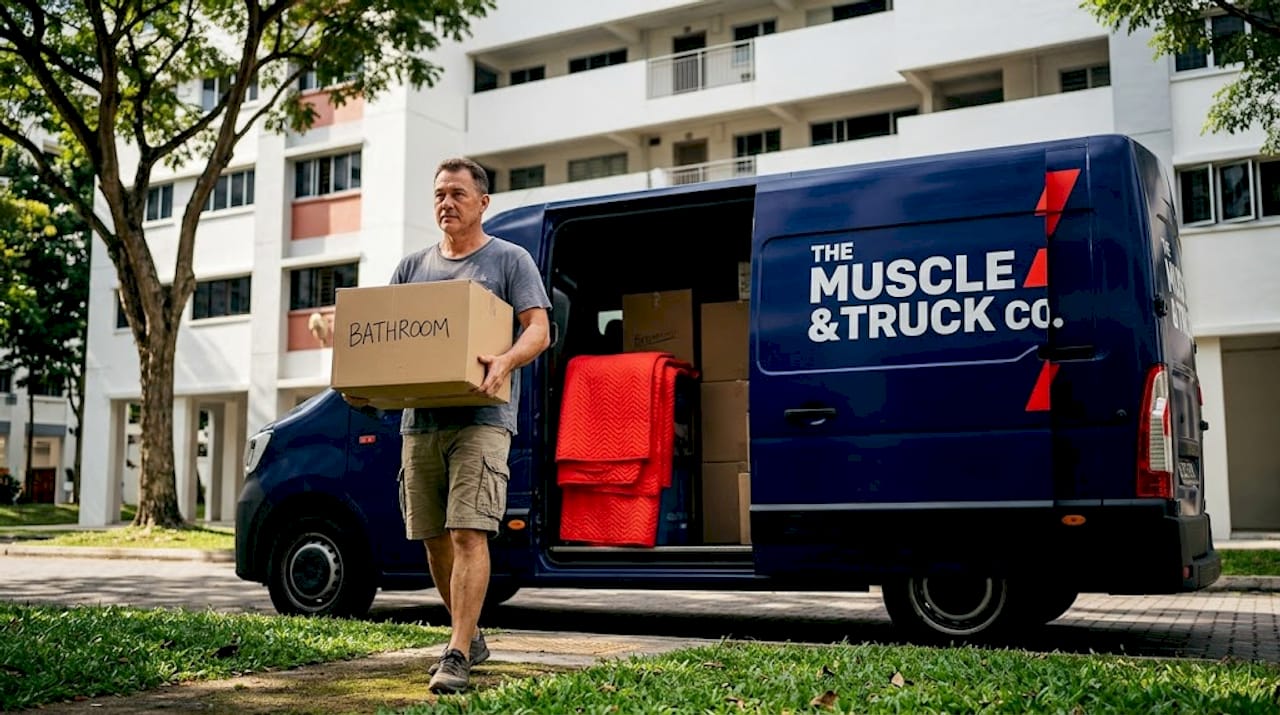
Choosing the right materials matters. Use sturdy double-walled boxes for heavier items like books and kitchenware. Lighter items like clothing can go into single-walled boxes or even large zip bags. Bubble wrap, old newspapers, and foam sheets all serve as effective padding. Wardrobe boxes are useful for hanging clothes, though they take up significant truck space.
Here are practical packing tips that experienced DIY movers rely on:
- Pack heavy items at the bottom of boxes and lighter items on top. This prevents crushing and makes boxes safer to lift.
- Fill boxes fully. Half-empty boxes collapse during stacking, damaging items inside. Use crumpled newspaper or clothing to fill gaps.
- Seal boxes with strong packing tape. Reinforce the base of every box with at least two strips of tape in a cross pattern.
- Wrap fragile items individually. Even if you are using a no-frills service that does not cover fragile handling, protect these items yourself with multiple layers of bubble wrap or soft fabric.
- Dismantle what you can safely manage. Bed frames, flat-pack shelving, and modular desks are easier to transport disassembled. Keep all screws and fittings in clearly labelled zip bags taped directly to the furniture piece.
- Create a loading order. Items that go last into your new home should go onto the truck first. Items you need immediately should be loaded last and unloaded first.
Remember: When using a no-frills service, the team will load and unload but will not rearrange items once placed. Know exactly where you want things before they arrive.
Safe loading is equally important. Keep walkways clear at both addresses. Wear closed-toe shoes on moving day. Lift with your knees, not your back, for anything you handle personally. For guidance on moving without packing service, preparation is your best protection against mishaps.
If you are moving a 3-room HDB, the DIY packing guide for HDB moves offers extremely specific advice tailored to Singapore’s most common housing type.
Pro Tip: Take photos of the back of your TV, entertainment system, and any complex cable setups before disassembling them. This makes reconnection at the new address much faster and far less frustrating.
Cost comparison and value: DIY vs full service mover options
Knowing your options is one thing. Understanding the actual cost difference is what motivates most people to go DIY. DIY moves can cost significantly less than full service movers, especially for small or pre-packed jobs.
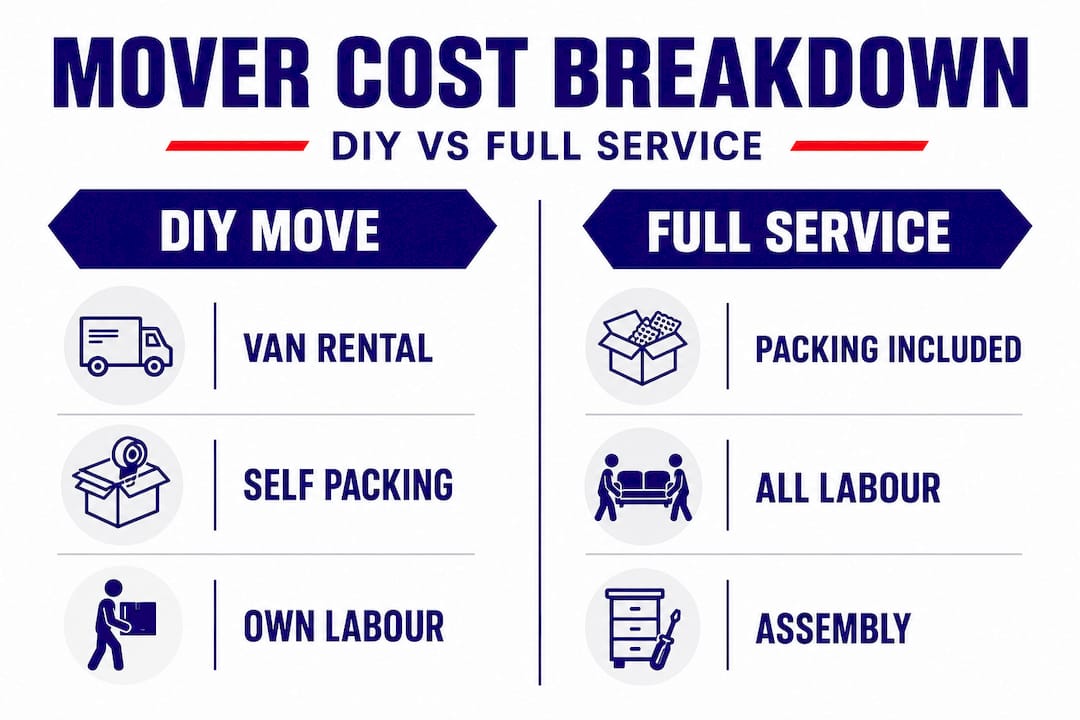
Here is a realistic cost breakdown for a 3-room HDB move in Singapore:
| Move type | Estimated cost | What is included |
|---|---|---|
| Full service mover | $900 to $1,800 | Packing, manpower, truck, insurance |
| No-frills service (truck + 2 workers) | $280 to $500 | Truck, loading, transport, unloading |
| True DIY (rented van, no manpower) | $100 to $200 | Vehicle only |
The savings potential is real. Choosing a no-frills approach over full service can save you $600 to $1,300 on a single move. For a small business relocating a compact office, similar savings apply.
Key factors that affect your final cost include:
- Volume of items. More items mean a longer job and possibly a larger truck.
- Distance of the move. Local moves within Singapore are generally priced by the hour or by job size, not distance, since the island is compact.
- Accessibility. If your building has no lift or requires long carries from the truck to the unit, expect a longer job and higher cost.
- Day and time of booking. Weekday moves are typically cheaper than weekend slots.
- Additional services. Any dismantling, special item handling, or storage add to the base price.
One often overlooked saving comes from decluttering before you move. Every large item you dispose of before moving day reduces the truck size required and the time needed. A single large wardrobe you no longer use could be costing you an extra hour of manpower time.
Explore the full cost-saving small move solutions available in Singapore to find the approach that works for your specific situation.
When to consider a hybrid solution or no-frills help
Pure DIY is not always the right answer. There is a practical middle ground that many Singapore movers overlook, and it is often the smartest choice. Flexible moving services allow you to avoid overpaying while getting just the help you actually need.
A hybrid approach means you handle all packing and preparation yourself, then hire a truck and workers for the physical loading, transportation, and unloading. This is the sweet spot for most small-scale movers.
Situations where hiring transport and manpower makes clear sense include:
- You have large or heavy furniture. Wardrobes, refrigerators, washing machines, and dining tables are genuinely risky to move without proper equipment and technique.
- You are moving alone or with limited help. Two people trying to move an entire flat is exhausting and slow. Professional loading teams are fast and experienced.
- Your building access is tricky. Narrow corridors, low ceilings, or lifts that stop between floors all require experience to navigate efficiently.
- You are time-constrained. Professional movers can often complete a load-and-unload job in a fraction of the time it takes untrained individuals.
- You want accountability. Even a no-frills provider gives you a booking confirmation and a point of contact if anything goes wrong in transit.
Pro Tip: If you have just three or four large items and many boxes, consider which items you absolutely cannot move safely yourself. Hire help specifically for those heavy pieces, and handle the rest personally. Some providers price by the hour, making this a cost-effective strategy.
The risks of hybrid moves are manageable. The biggest one is poor communication between you and the team about what is and is not included in the service. Always confirm the scope clearly before the job starts. Know what the team will and will not handle, and have everything pre-packed and ready to go when they arrive. Time spent waiting for you to pack is time you are paying for.
The reality of DIY moving in Singapore: hard truths and practical wisdom
Here is something most moving guides will not tell you. The savings from going DIY are real, but they come with a cost that is not always measured in dollars.
The first hard truth is that time is money, and DIY moves take far longer than people expect. First-timers routinely underestimate how long packing takes. A two-bedroom flat can take eight to twelve hours of focused packing time if you have never done it before. The insights from a DIY packing guide consistently show that people start packing far too late and then scramble on moving day.
The second truth is that injuries happen more than people admit. Lower back strain from lifting awkward boxes is one of the most common moving day injuries. This is not a reason to avoid DIY entirely, but it is a reason to be honest about your physical capabilities and to ask for help with genuinely heavy items.
The third truth is perhaps the most useful. The biggest differentiator between a smooth DIY move and a chaotic one is not physical strength or even experience. It is flexibility and problem-solving. Lifts break down. Rain falls unexpectedly. Parking restrictions appear at the last minute. Movers who adapt quickly, who have backup plans, and who do not catastrophise every setback, almost always end up with a positive experience regardless of the specific challenges that arise.
We also see this pattern repeatedly: people who over-plan the route but under-plan the packing end up in the most difficulty. Spend your planning energy where it actually matters, which is in preparation, not logistics.
Ultimately, DIY moving in Singapore works well when you are honest about what you are taking on, realistic about your timeline, and willing to hire targeted help for the parts that genuinely require it.
Affordable, flexible moving solutions with The Muscle & Truck Co.
You have done the research, made a plan, and know what kind of move you are dealing with. Now you need the right support to execute it well.
The Muscle & Truck Co. is built specifically for situations like yours. Whether you are relocating a studio flat, clearing a small office, or moving a handful of pre-packed rooms, the service is designed around your schedule and your budget. There is no pressure to book services you do not need, and pricing is transparent from the start. Use the get instant moving quote tool to see exactly what your move will cost in minutes, with no hidden charges or vague estimates. Explore all the Muscle & Truck moving solutions available and find the right fit for your pre-packed, small-scale move today.
Frequently asked questions
What is a no-frills moving service and how does it differ from full service movers?
A no-frills moving service provides only transport and manpower, while full service movers handle packing, unpacking, and all logistics. As outlined in flexible moving services, no-frills providers are ideal for pre-packed, smaller jobs where packing and preparation is already done by the customer.
How much can I save by moving without full service movers?
You can often save hundreds of dollars by packing and handling your own items, especially for smaller moves in Singapore. For a typical 3-room HDB, cost savings of $600 to $1,300 compared to full service options are realistic.
What are the main risks for DIY movers?
The main risks include injury during heavy lifting, damage to fragile items, and possible delays without professional help. Packing carefully and planning your move timeline realistically reduces most of these risks significantly.
When should I consider hiring transport or manpower instead of going fully DIY?
If you have large furniture, heavy items, or limited help, hiring transport or manpower makes your move safer and more manageable. Flexible moving services allow you to pick exactly the level of help you need without paying for services you will not use.
Recommended
- Moving Without Packing Service – The Muscle & Truck Co.
- How to prepare for movers: a stress-free move guide – The Muscle & Truck Co.
- STOP OVERPAYING FOR MOVERS: THE HONEST GUIDE TO FULL SERVICE VS. NO-FRILLS – The Muscle & Truck Co.
- How movers simplify your BTO move: expert tips – The Muscle & Truck Co.